 |
My Account | Shopping Cart | ||||||||||||||||||||||||||||||||||||||||||||||||||||||||||||||||||||||||||||||||||||||||||||||||||||||||||||||||||||||||||||||||||||||||||||||||||||
 |
|||||||||||||||||||||||||||||||||||||||||||||||||||||||||||||||||||||||||||||||||||||||||||||||||||||||||||||||||||||||||||||||||||||||||||||||||||||
|
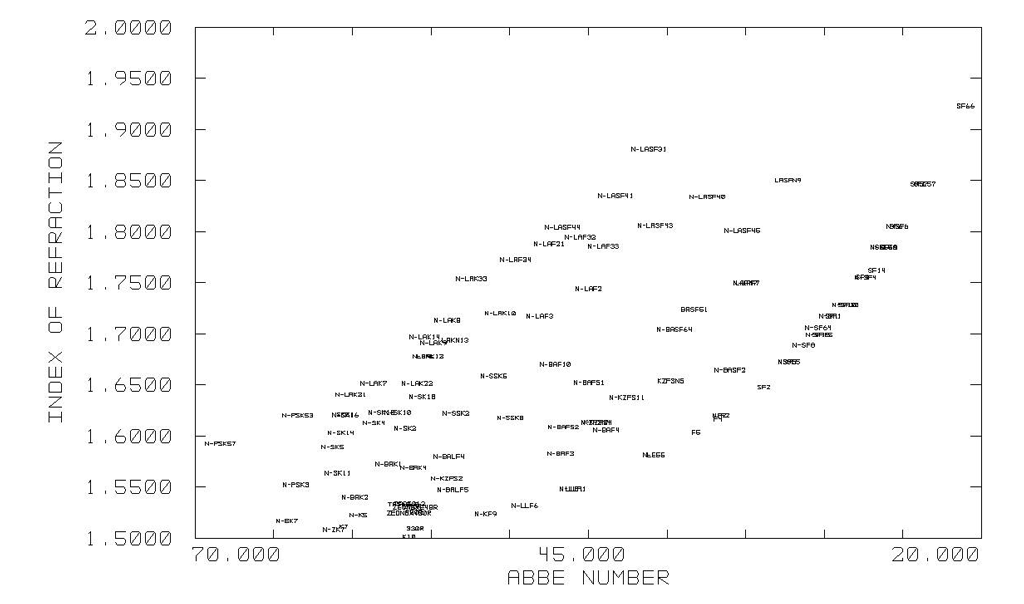
Optical components are fabricated using a variety of materials including optical glasses, engineered plastics and crystalline materials. Glass material is the most common type because of its excellent optical properties such as high light transmission and environmental stability. There are many types of glass materials suitable for making optical components. The specific selection depends on the optical performance requirement, environmental suitability, ease of fabrication and cost. The main characteristics of an optical material are represented by its refractive index (Nd) and its dispersion index (Abbe number) as shown in the following figure:
Suitable plastic materials can also be used in fabricating low-precision optical components. There are only a handful of plastic materials with limited index of refraction and Abbe values to choose from. The highest available index is about 1.6. The main benefit of plastic material is that it can be made by various molding techniques thus reducing the cost of manufacturing. However the precision achievable with plastic is limited by the material properties and the molding process. Plastic optics is typically used as eyeglass lenses, magnifier lenses, educational optics, etc. Plastic optics can also be combined with glass optics to form hybrid optical systems. Download a white paper on "plastic vs. glass optics". Special materials such as quartz, sapphire, fused silica, etc are also used to fabricate optical components. Optical quartz is a birefringent material with non-isotropic optical properties. It is used in optical low-pass filters and specialized fiber-optic devices. Sapphire is a special material with very durable surface quality. It is often used to fabricate optical windows which protects the internal optical components against harsh environment. Fused silica material has excellent UV transmission, and it is very stable thermally. It is used for fabricating UV optics such as lenses and prisms. The following table shows a list of most commonly used materials along with their key properties. Definition of terms used in the following table is as follows:
|
||||||||||||||||||||||||||||||||||||||||||||||||||||||||||||||||||||||||||||||||||||||||||||||||||||||||||||||||||||||||||||||||||||||||||||||||||||
|
|||||||||||||||||||||||||||||||||||||||||||||||||||||||||||||||||||||||||||||||||||||||||||||||||||||||||||||||||||||||||||||||||||||||||||||||||||||