|
Optical coatings are often used to enhance the performance of optical
components. They are also used to reflect, absorb, and selectively
reflect/transmit light based on wavelength or the state of polarization.
Some commonly used optical coatings are:
- Anti-reflection coating (AR) is used to reduce the surface reflection of
optical components over a narrow or broad range of wavelength. Commonly used
AR coating types are: a single layer of MgF2 or a broad band anti-reflection
coating (BBAR) consisting of several layers of optical materials. AR
coating is used on most multi-element lens designs to increase light
transmission and reducing ghost images.
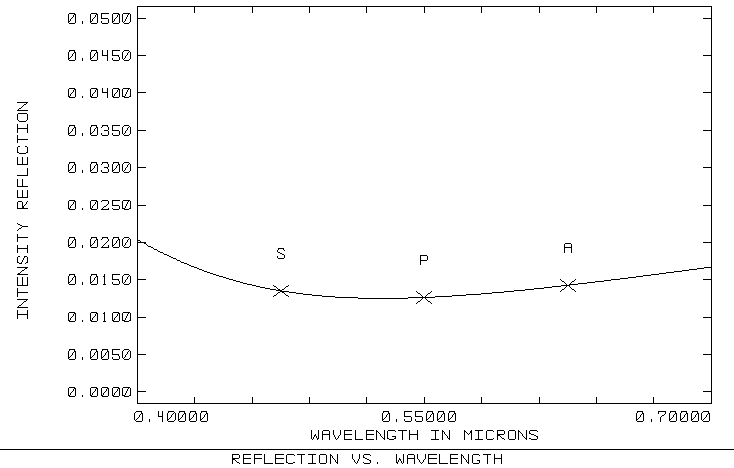
Typical theoretical single layer MgF2 AR coating spectrum:
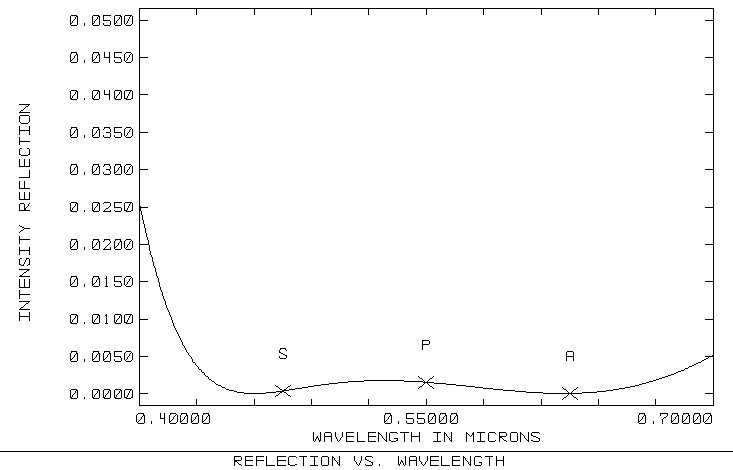
Typical theoretical broad band anti-reflection coating (BBAR) spectrum:
- High reflective coatings: These coatings are applied to optical
components to form highly reflective mirror surfaces:
- Intensity beam splitting coating which transmits a portion of the incident
light and reflects the balance.
- Polarization beam splitting coating which separate light by its state of
polarization:
- Long-pass and short-pass filters: A long-pass coating transmits light
above certain wavelength. A short-pass coating transmits light below a
certain wavelength: The reflective
IR cut-off filter is a short-pass filter which passes visible while
blocking near infrared light.
- Band-pass and notch filters: band-pass filters transmit light within a
narrow band of wavelength while notch filter reflects light over a narrow
band of wavelength.
For a detailed discussion of optical coatings, please refer to the book
"Optical Thin Film Filters" by H. A. Macleod.
|